
Why You Should Care About AI
By Seana Siekman, VP Innovation & Marketing Intelligence

AI might feel like a move away from people, but for us, it amplifies human-centered creativity and productivity.
With AI capabilities advancing at an unprecedented pace, the focus on job displacement is understandable, especially when big companies like Microsoft, Walmart, Amazon, and Salesforce are making headlines with thousands of workforce reductions.
But the story is more complex: New models are launching, automations are becoming more accessible, and everyday tools are being reimagined with built-in intelligence. As former Walmart CEO Doug McMillon recently remarked, “Maybe there’s a job in the world that AI won’t change, but I haven’t thought of it.” We are not on the brink of change, but in the middle of it.
As someone who has had both the privilege and overwhelming responsibility of tracking these shifts, I see both unease and excitement at this moment. While much of the economic narrative currently focuses on job cuts, the story being lost is one of transformation. Jobs are evolving, new ones are emerging, and the way we work is fundamentally shifting.
Who is AI benefiting? Turns out, everyone
Our approach to AI at Athena starts with our people. Where are teams losing time? Where does data sit unused? What tasks are disliked or draining energy? Those are the right entry points for AI.
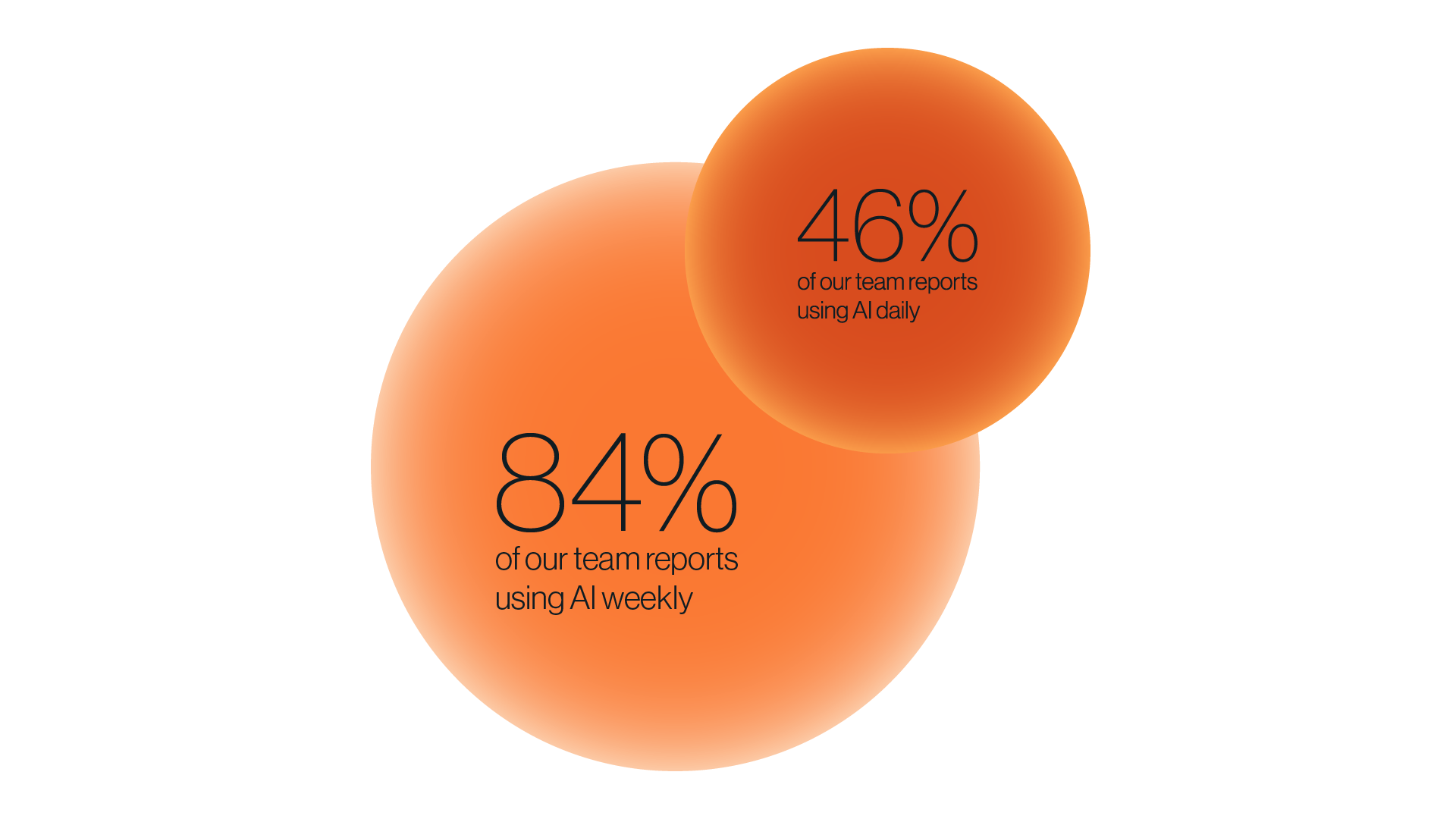
By asking the right questions, choosing the right tools, and fitting them into our daily workflows, we are seizing new ground that will keep us at the forefront of an evolving market. In a recent survey of our team, 46% of our employees reported using AI daily, with weekly users making up 84% of the company. While we still have immense opportunity on our AI journey, we are optimistic based on our current adoption rates.
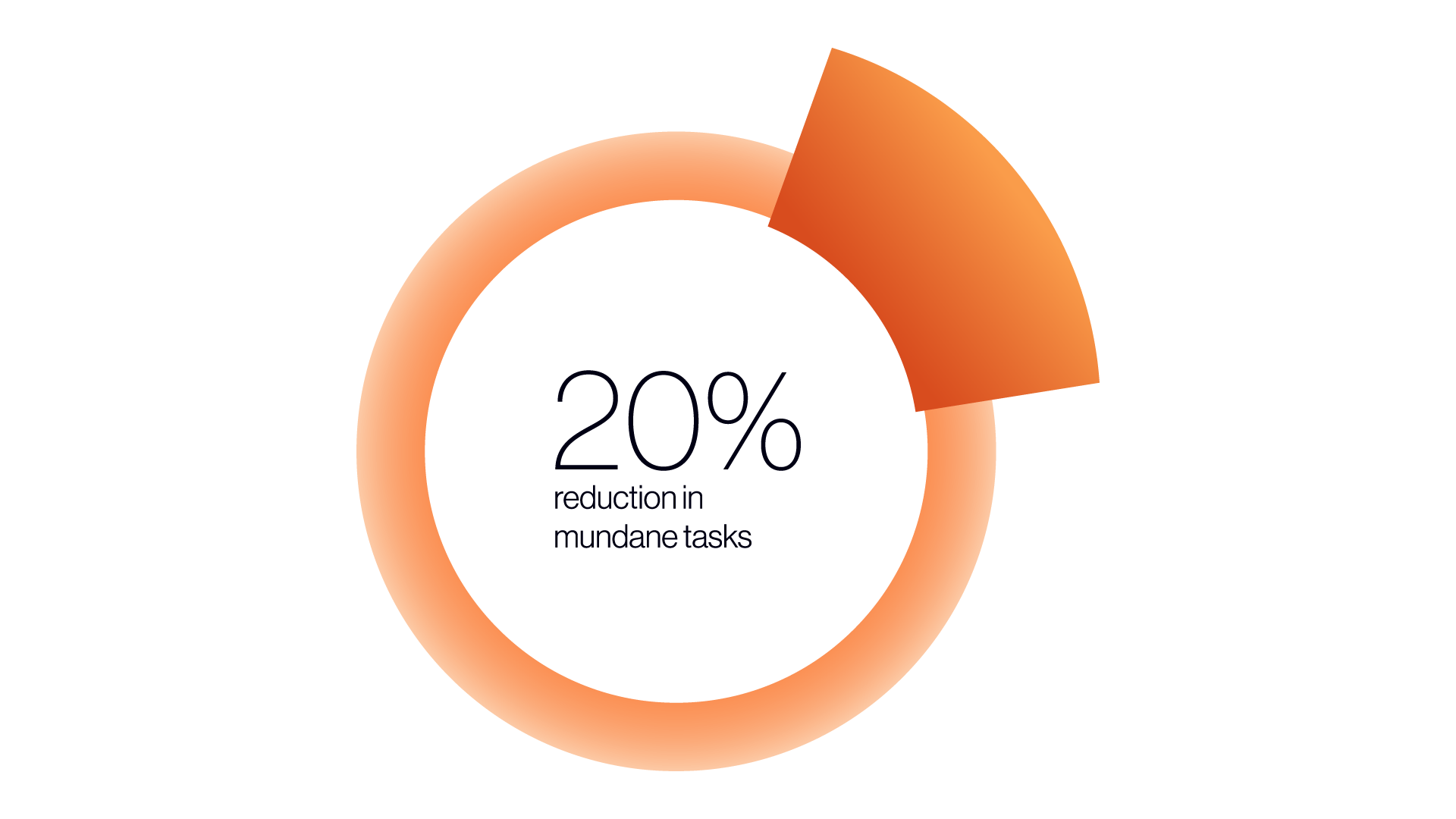
Over the past year, we’ve reduced mundane tasks by at least 20%, with a continued lens on tracking the ROI of our investments. AI does the heavy lifting for weekly executive summaries, meeting minutes with action items, versioning asset sizes, and creating visuals for internal initiatives. Using custom agents, purpose-built AI workflows trained on specific reference materials and instructions, we’ve been able to tailor client outputs, seamlessly incorporating reference materials and other related information that would historically been left to the wayside. AI has enhanced our growth initiatives, doubling the number of RFPs we participate in.
Quality over speed
Speed is often celebrated as AI’s biggest advantage, but moving fast means little without quality. Elevating the work product should be the primary goal. The growing trend of “work-slop,” using AI to replace human effort rather than enhance it, risks lowering standards across the board. The point should be to do better work more efficiently. AI integration should improve outcomes, in handling repetitive, time-consuming tasks as well as serving as a strategic companion. Individuals who do so are able to better leverage their creativity and judgment, making the human component count more.
For a large media-monitoring project, we’ve just completed a successful pilot for where AI processed between 150 and 500 articles of content each day, determining article relevancy and importance for reporting and summarizing content in our preferred tone. Once scaled, we expect to save more than 40 hours of manual effort a week. Our accuracy has improved in the process, surfacing relevant content deep within articles that were previously missed through human review. What once took hours now takes minutes, freeing teams to focus on meaningful, thought-provoking work.
Laying the groundwork
As a services organization, we navigate two AI journeys simultaneously: Our own and our clients’. We need to understand their approved tools, their appetite for AI across functions, and how we can support both. This becomes a critical conversation throughout client relationships to ensure comfort with our technology choices and work quality. Transparency and accountability matter as much as innovation.
It is tempting to want to implement everything at once, but success comes from focus. Start small, prove value, standardize, and then scale. Organizations that rush in without structure often end up with too many disconnected tools competing for attention and creating inefficiencies. The better path is to proceed thoughtfully, organize data, align goals, and build a solid foundation for sustainable progress.
We know those who develop AI literacy will define the next era of productivity. It starts with individuals getting comfortable using AI to enhance their own efficiency and creativity. It grows as teams link insights and automate workflows, and scales when organizations establish governance, learning structures, and ethical frameworks to guide AI adoption. When those layers come together, AI becomes more than another piece of software; it becomes a true partner.
Looking to the future
AI is changing how we work, how we communicate, and what we bring to the marketplace to create value. And while it feels like the pace of AI is only accelerating, meaningful transformation at large organizations will still take time. This period of transition gives us space to learn, adapt, and grow.
We are already working on what this new age of work will look like, learning from each other alongside our clients, sharing what works and what doesn’t, and creating space for honest experimentation. During monthly inspiration sessions, we highlight tips and tricks, exchange prompt enhancements, train custom agents, and review areas where we tried to leverage AI without success. We dive deep into project-specific use cases with department working sessions and have greatly reduced the amount of time spent on repetitive research tasks. The next step in our commitment to investing in AI literacy and in the people who make technology useful is formalizing our training programs with a planned AI bootcamp.
We are integrating AI with forethought and intention at Athena, making the most of this evolving platform to enhance client outcomes. And we’re not doing it alone. We’d love to hear about your AI wins, challenges, and how you’re evolving its use at your company.